Seaspan's Venture Fund Opens a Door for Western Innovators
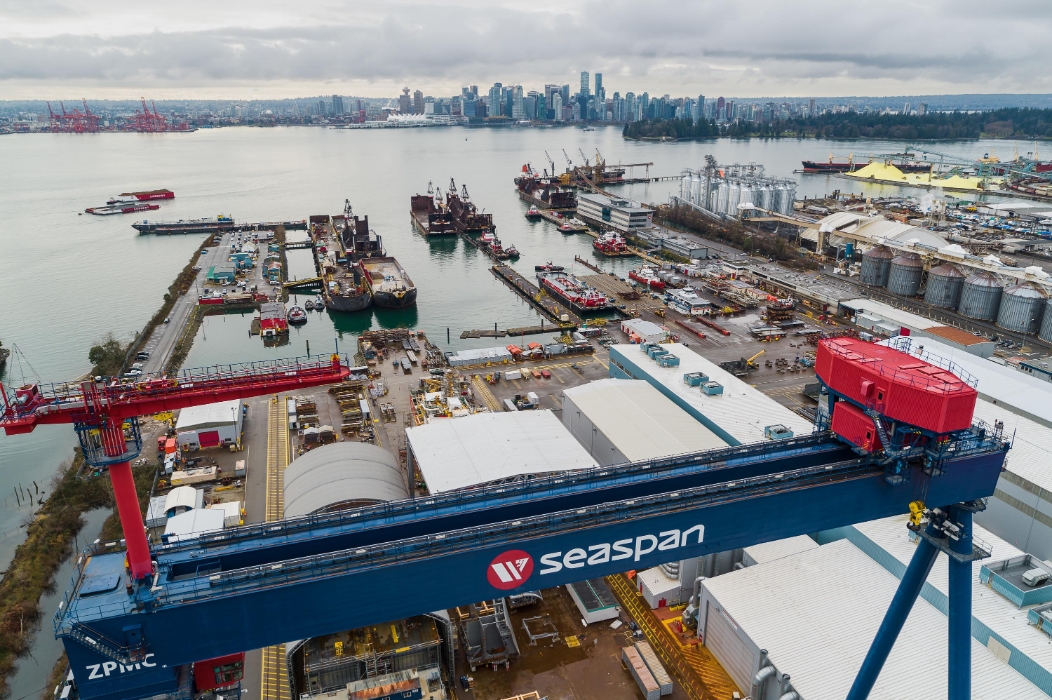
On October 19, Seaspan Vancouver Shipyards announced a corporate venture capital fund to take minority equity stakes in Canadian small and medium-sized businesses building defence, marine and dual-use technologies. It is one of the most practical signals yet that Canada's new defence and shipbuilding demand can become growth for companies here in the West.
The announcement is short on dollar figures but long on intent. Seaspan will run the fund from its North Vancouver headquarters, source and manage the investments itself, and pair capital with the thing most early-stage companies lack: a seat close to a working shipyard. The stated aim is to help Canadian firms commercialize, join the shipbuilding supply chain, and reach domestic and export markets, while keeping intellectual property and high-value jobs in Canada.
I have spent my career on both sides of this equation: commanding a warship that depended on what industry could deliver, leading shipowner and shipping associations, and now working with early-stage maritime and technology founders. From where I sit, this is good news for Western Canadian innovators, and worth acting on early.
Why this is not ordinary venture capital
This fund is strategic capital with a customer attached. That distinction matters more to an early-stage hardware or deep-tech company than the size of any cheque.
Three features stand out:
- It is tied to industrial obligations. The fund builds on the venture capital provisions of Canada's Industrial and Technological Benefits (ITB) Policy and on Seaspan's Value Proposition commitments under the National Shipbuilding Strategy. Investments help Seaspan meet those obligations, so the incentive to find and back Canadian companies is structural, not discretionary.
- It is aligned to real demand. Seaspan says investments will track the capability, industrial and supply chain priorities of the Royal Canadian Navy and the Canadian Coast Guard. That is a far clearer demand signal than most early-stage investors can offer.
- It comes with a path to market. Portfolio companies get industry access and mentorship, and a route into one of the country's largest marine supply chains. Seaspan's National Shipbuilding Strategy supply chain already spans more than 800 Canadian companies and over $3 billion in contracts.
It also arrives alongside Seaspan's recent memorandum of understanding with the Business Development Bank of Canada (BDC) to pilot capital and mentorship support for Canadian companies. Read together, they suggest a deliberate effort to build a pipeline of suppliers rather than make a handful of one-off bets.
This answers a complaint the federal government heard directly during consultations on the Defence Industrial Strategy: smaller firms found it hard to get meetings with, let alone investment from, the primes holding ITB obligations. A prime that invests directly, from a local office, removes some of that friction.
Why it matters for the West, and why now
Canada is asking its industry to deliver more, faster, and from home. The Defence Industrial Strategy released in February targets 70 per cent of defence acquisitions going to Canadian firms, and more than $5.1 billion a year in new defence revenue for small and medium-sized businesses. It also aims to lift maritime fleet serviceability to 75 per cent and to accelerate procurement of Canadian-made innovation.
Several of the strategy's ten sovereign capabilities sit squarely in marine territory: naval in-service support, marine sensors, surface ships and icebreakers, and uncrewed and autonomous surface and underwater systems. These are areas where Western Canada already has firms, talent and test waters.
The gap has never been ideas. It has been the stretch between a working prototype and a contract: proving a technology at sea, meeting naval and class standards, building a supply record, and surviving long procurement cycles. Too many promising B.C. companies have stalled there or moved south to find capital.
That is why a domestic proof of concept matters so much. New and growing companies rarely win Canadian procurement, or the confidence of foreign buyers, until their technology has been shown working in Canadian conditions with a Canadian customer. Allies want to see that Canada already trusts what it is being asked to buy. A shipbuilder that invests in, tests and integrates a technology can provide that first, credible reference.
Much of Canada's defence industrial base, and the capital that follows it, has long clustered in Central Canada. A prime-led fund headquartered in North Vancouver, with shipyards in North Vancouver and Victoria, puts investment decisions close to West Coast founders. Proximity is not everything, but in this business, being able to walk a technology down to the dock is a real advantage.
Timing also matters. Demand for uncrewed systems, maritime domain awareness, Arctic capability and fleet sustainment is time-sensitive. The companies that are ready to engage in the next 12 to 18 months will help set the standards that others then have to meet.
What founders should do now
Seaspan has not yet published the fund's size, cheque sizes or an application process. That is no reason to wait. Companies that want to be in the first conversations should start preparing now.
- Map your technology to a stated need. Read the Defence Industrial Strategy's sovereign capabilities and the Navy and Coast Guard priorities. Be able to say in one sentence which capability gap you close.
- Show the dual-use case. Seaspan is explicit about dual-use applications. A credible commercial market alongside defence makes you a stronger investment and a more resilient business.
- Get your intellectual property in order. The fund's purpose is to keep IP and jobs in Canada. Know what you own, where it is protected, and who else has rights to it.
- Secure a domestic proof of concept first. Trials data, class or standards pathways, and an honest technology readiness level carry more weight with a shipbuilder than any pitch deck. Find a Canadian operator, port or shipyard to validate your technology before you pursue major contracts at home or abroad.
- Understand the ITB system. Learn how ITB credits work, including the recent changes that reward primes for working directly with Canadian small and medium-sized businesses. You are more attractive when you understand the value you create for a prime.
- Stack your capital. Look at this fund alongside BDC's $4 billion Defence Platform, NRC IRAP's defence stream, and regional defence investment programs. Strategic and public capital work best together.
- Prepare for security requirements. Clearances and facility accreditation take time. Starting early signals you are serious about defence work.
A welcome step
Seaspan deserves credit for turning an industrial obligation into an investment platform with a clear purpose. If the fund is run with the discipline the announcement promises, it can help a new generation of Western Canadian companies move from prototype to fleet.
The opportunity is real, but it will favour those who prepare. Founders who speak the language of naval requirements, industrial benefits and shipyard supply chains will move faster than those who do not.
That translation work is where I spend my time, through Lewman Strategies and as Entrepreneur-in-Residence at SFU VentureLabs. If you are building marine, defence or dual-use technology and want to talk about positioning for this fund, or for the wider opportunities under the Defence Industrial Strategy, I would be glad to connect.
Robert Lewis-Manning, OMM, CD, MBA
Sources
- Seaspan launches corporate venture capital fund to advance Canadian defence and marine innovation (Seaspan, October 19, 2026)
- Canada's Defence Industrial Strategy: Security, Sovereignty and Prosperity (National Defence, February 2026)
- Seaspan signs MOU with Stigterstaal Canada and Algoma Steel (Vanguard, for NSS supply chain figures)
- Industrial and Technological Benefits Policy (ISED)